Showing posts with label Dr. Faustus. Show all posts

Wednesday, November 6, 2013

Faustus's Fear of the Question Mark

     Originally as I read Doctor Faustus in a the literal sense, I was genuinely bothered and perplexed by Faustus's act of selling his soul to the devil. I couldn't imagine what drove him to go to such extreme measures. Eventually, I found peace in a more figurative reading, but I also settled on the idea that Faustus just couldn't handle uncertainty.


     This uncertainty that Faustus tries to shake begins as soon as he signs the bloodily- instated contract.  What does he do immediately? He asks about Hell – he wants to know about something unknown.  Faustus must have been aware that, in Heaven, souls would be privy to “knowing all,” but he wasn't willing to wait to find out if he'd ever even get there. So Faustus decides to find another route to a state of “enlightenment:” through the devil.
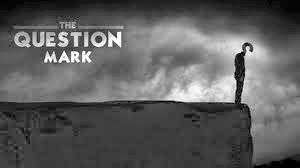


     Now I know I mentioned this a few weeks back when we were actively discussing this play, but I never completely voiced my final thoughts on the subject.  And the more I think about it, the more I believe that, given what we learn about Faustus's character, this scholarly character was not keen on anything abstract or ambiguous.  After all, as an intelligent fellow in the business of learning, it would seem easy for him to neglect to leave room for the spiritual aspect of faith. And this proves to be what ultimately ends up getting him into trouble.


    Faustus displays a lack of faith inasmuch he refuses to trust that God would allow his salvation before his “great sin” (the contract), but also after.  He fails to believe God will protect him should he attempt to repent; and although the demons threaten to tear him apart should he try to flee Hades's grasp, was this not that his final fate anyway? What did he have to lose? He had Heaven to gain if his redemption was accepted and only to fall back on his future in Hell if not!


     In this piece, it is clear that well-educated and intelligent Faustus aspires to know all.  It is no fluke these characteristics are present for they are vital for his character development.  To use a cliché, knowledge is power to Faustus.  He believes he can take authorial power over his fate, taking it into his own hands. But in the end, does Faustus believe that eliminating uncertainty is really worth the cost?

Monday, October 28, 2013

Pity for the Not-So-Good Doctor

I have had Dr.Faustus on the brain for a good part of the day and I am starting to rethink my earlier callous conclusions about his redeem-ability as well as whether or not he is worthy of empathy. In hindsight, I'm actually kind of ashamed at my immediate dismissal of him as a character worth nothing but derision. Now I see a man disillusioned and lonely, who feels forsaken by God and, as Adelai mentioned, lacks the faith necessary to deal with uncertainty. His story mirrors that of an addict the euphoric beginnings, the slow degradation and the slide into certain hell. Through this lens he becomes an object of pity.

5 Ways Faustus is like an addict

1. He is desperately lonely and disillusioned leaving him vulnerable to poor decisions such making deals with the devil. Also, he shows a determination to this path even though the devil himself tells him it is a bad idea. Heck, his own body shows hesitancy when his blood congeals before he is able to sign the contract and yet he allows Mephistopheles to warm it back to inky consistency!

2. At first he is flying high - literally in a chariot pulled by dragons through the cosmos but...

3. All too soon he is reduced to a clown, begging for attention and playing cruel pranks on those whose circumstances lesser than his own. Which leads to -

4. He becomes so obnoxious that even Mephistopheles distances himself from him. In scene 4, his devil on loan is only found when called. He is becoming more alone.

5. He realizes too late that he has friends. It is not until his hour of death is nigh that Faustus recognizes the scholars as people who care about him. By then it is too late - only because Faustus himself believes it is. The old man tells him that redemption is right there in the form of an angel over his head and yet he refuses to believe it and has the old man punished for his efforts. God and man will forgive Faustus if only he would forgive himself.

1 of  5


Squandering Power

Alright, so today in class we were discussing Dr. Faustus and if he deserved to be redeemed and go to heaven or to burn in hell for all eternity. Then, we started to talk about how Faustus used his power; which leads me to the topic of this blog: squandering of power.

Now, it is blatantly obvious to anyone who's read the whole play through that Dr. Faustus that Faustus does, indeed, squander his power. We already discussed that this was meant to frustrate the audience, but was it also used as a way to further push the audience to want Faustus to burn?

I think that if the play ended with God descending from heaven and bringing Faustus up with Him, then the audience would be kind of peeved off. And by kinda, I mean very.

I just can't imagine seeing someone who already had such a good life, decide it's not good enough, and then sells his soul to Satan just to pull cheesy pranks on everyone instead of doing some good with his life. Granted, you still aren't doing much "good" with the power of Satan (unless, you're the Ghost Rider of course).

Still, Faustus still could've done something so dastardly evil, like wage war against heaven or something.

I guess, if the play was written where Faustus used his deeds for good, then I kinda have a feeling it would probably be really similar to the plot of Ghost Rider (you know, dude signs his soul over to Satan with good intentions...ends up doing other cool stuff instead...you get it). Also, they would not have had the technology to produce a scene as awesome as this one back then, so I guess it all worked out for the best.

Also, I just realized that with this hell power, Faustus could essentially be Ghost Rider. I mean, he did have the power, just not the desire to do good for anyone other than himself.

I guess if Faustus truly used his powers for evil, then I guess the answer to the grand question of if he deserves to go to hell would be made too easy. It's the general consensus that bad guys burn and good guys get to ride off into the sunset after all.

Sunday, October 27, 2013

A Fallen Angel’s Pain

(FYI: my version of the play is on my I Pad and only gives me page numbers and not line numbers)

My favorite part, by far, of the play, Doctor Faustus, is the character Mephistopheles. When Dr. Faustus asks Mephistopheles about hell “First I will question with thee about hell. Tell me where is the place that men call hell?” (31). Mephistopheles responds with “[Hell is] within the bowels of these elements, where we are tortur’d and remain for ever; Hell hath no limits, nor is it circumscrib’d in one self place ; for where we are is hell, and where hell is there must we ever be” (31).

Before this Mephistopheles states how hell pains him, “…I who saw the face of God, and tasted the eternal joys of Heaven, [I am] tormented with ten thousand hells, in being depriv’d of everlasting bliss” (21).

This reminded me of the movie Dogma, written and directed by Kevin Smith (director of the Jay and Silent Bob stoner movies). When the fallen angel Bartleby rants to Loki about God’s love and forgiveness of his favorite creation (man) and how as angels they must constantly feel the absence of God. (It’s a great movie, I highly recommend it).


http://www.youtube.com/watch?v=CSQYRq8kf4g  (sorry for the advertisement)

In artwork from around the period Doctor Faustus was written, the Devil was commonly depicted as blue or black. The color blue was chosen (as I believe) to represent the coldness the devil and demons feel no longer being warmed by God’s love. Without God there is nothing. According to physics you cannot add cold, you can only remove heat. Without God there is nothing, removing everything from life. Essentially, in the realm of physics, hell could only be darkness and cold, void of everything. Like cold, you cannot add darkness, only remove light. I find this an incredibly interesting concept. Even more so is the transition of the interpretation of the Devil and hell. Here he is blue, later he is half-beast/half-human, then red with fire and brimstone, and then in class we agreed that the Devil would simply be an attractive person. The Bible also supports a blue devil with the hot/cold interpretation in Revelations 3:15-16—I know thy works, that thou art neither cold nor hot: I would thou wert cold or hot. So then because thou art lukewarm, and neither cold nor hot, I will spue thee out of my mouth.

This means (in my understanding) that you are either hot (passionate) for the Lord our God or are cold (uncaring) of Him. Then there are those who feel he exists, but do not love Him or worship Him and to God these people are just as bad and he will spew them from his mouth and cast them aside. Indifference is worse than cold in God’s eyes.

Giotto’s The Last Judgment, painted in 1306, shows this tormenting and tormented blue devil: